- Have any Questions?
- +91 8130779884
- daulatenterprises.mm@gmail.com

Solar Panel Cleaner vs Water: Which Is Better for Maximum Efficiency?
February 26, 2026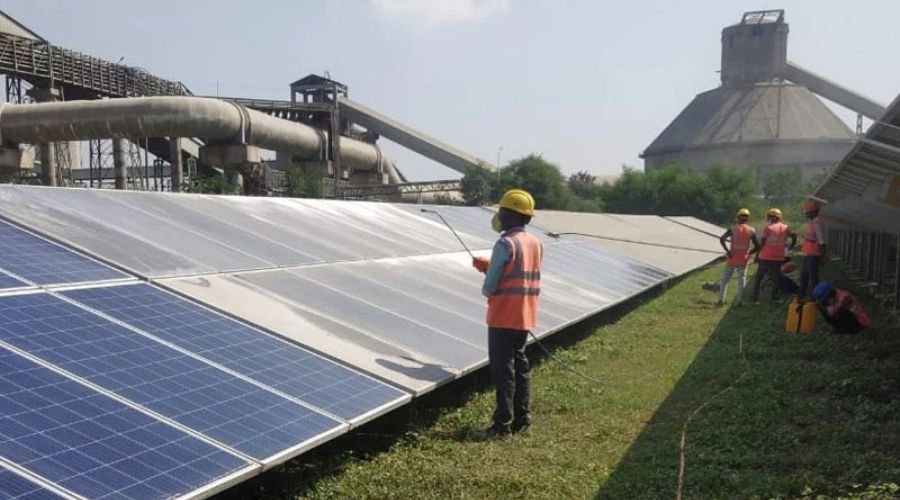
Industrial Solar Panel Cleaner
In big solar farms, even a bit of dust can reduce the output with time. At first you might not notice, but it builds up slowly. It may seem like a percentage drop won’t matter, but when we add it across hundreds of panels, it is a noticeable degree in total energy generation. In that situation, cleaning can help, but not all residue is cleaned with simple water. Since it only removes loose dust, we need an industrial solar panel cleaner for effective cleaning. So here this guide talks about the solution while also informing you about the types of dust, cleaning methods, and when industrial solar panel cleaning is actually needed.
How Cleaning Affects Energy Output in Solar Farms
Cleaning in solar farms is not just a routine task. It directly affects how much energy the system can produce. When the dust sticks on panels, it blocks the sunlight and reduces the absorption. And this is what decreases the output. Well, in small setups, this loss may not seem serious. But when we’re talking about big solar farms, this issue can add up quickly.
However, the bigger issue is not one-time dust but regular dust. If you put off cleaning or don’t do it right, the loss starts to happen regularly instead of just now and then. This affects the entire energy production and also the return on investment. This is why a proper solar panel cleaning system for solar farms is important. And the right solar farm cleaning equipment is not just about removing dust but also keeping performance stable at the big scale. The things can get more complex when all types of dust don't behave in the same manner.
Types of Dirt That Affect Solar Panels and Why They Matter
As we talked, there are many types of dirt, and not all act in the same way. Some can be cleaned easily, but some stay even after a tough try, which directly affects how well the method works.
- Loose dust → Sits on the surface and is easy to remove with water or air. It rarely affects performance if cleaned early.
- Sticky grime → Forms when dust mixes with pollution or moisture. It sticks to the surface and does not come off with basic cleaning.
- Mineral residue → It remains from dried hard water on the panels. It leaves a thin layer that blocks sunlight and often stays after repeated washing.
- Bird droppings and industrial particles → Stick in patches and create uneven blockage. These are harder to remove with normal cleaning.
Now you might have understood that types of grime can be the reason why cleaning solar panels largely depends on the buildup. And not just on the method.
Common Solar Panel Cleaning Methods and Where They Fall Short
Existing cleaning methods work, but after a time they start falling short as dirt increases. Here are some of the following methods and where they fail:
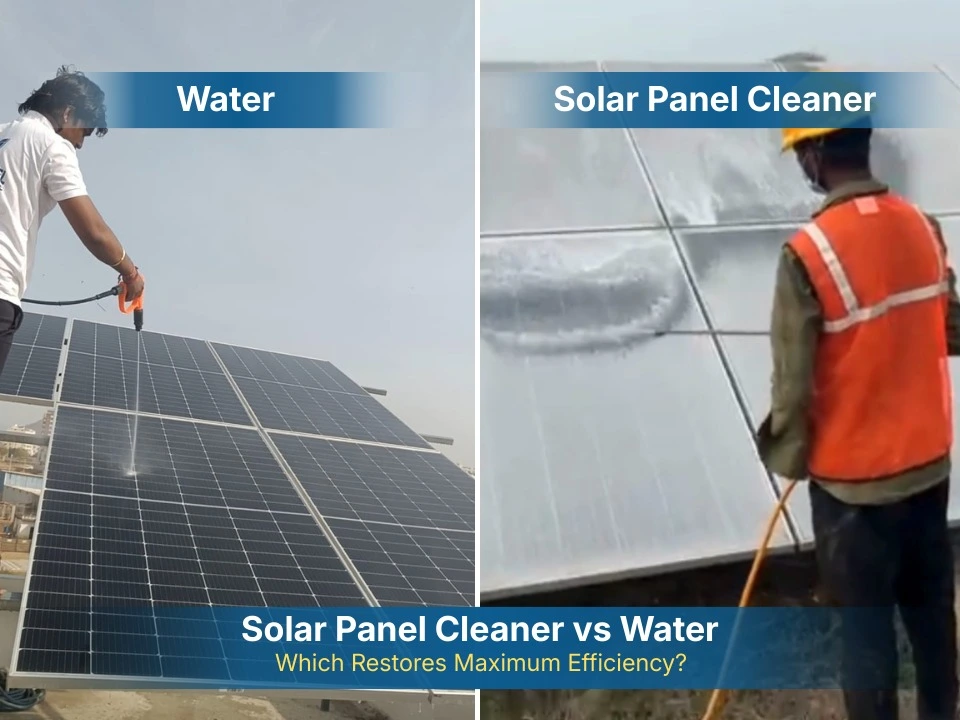
- Water cleaning works well for loose dust. But it always leaves behind the mineral residue, especially when it's done with hard water. That thin layer is not always visible, but it still keeps blocking sunlight and slowly reduces efficiency, even after repeated cleaning.
- Cleaning manually is easy, but it takes time and effort. It gets harder to keep things the same in big solar farms. If some areas are missed or cleaning is uneven, the performance of the panels may not be consistent, which affects the overall output.
- An automated solar panel cleaning system helps with regular dust removal and reduces manual effort. It works well for ongoing maintenance. But it struggles with sticky grime and bonded deposits, which need more than routine cleaning.
These methods are effective for surface dirt, but not for deeper buildup. Over time, this is where performance starts dropping again. In such cases, solutions like SPERESIK-4G are used to remove residue that basic methods leave behind. This is where the need for more targeted cleaning becomes clear.
When Industrial Solar Panel Cleaners Become Necessary
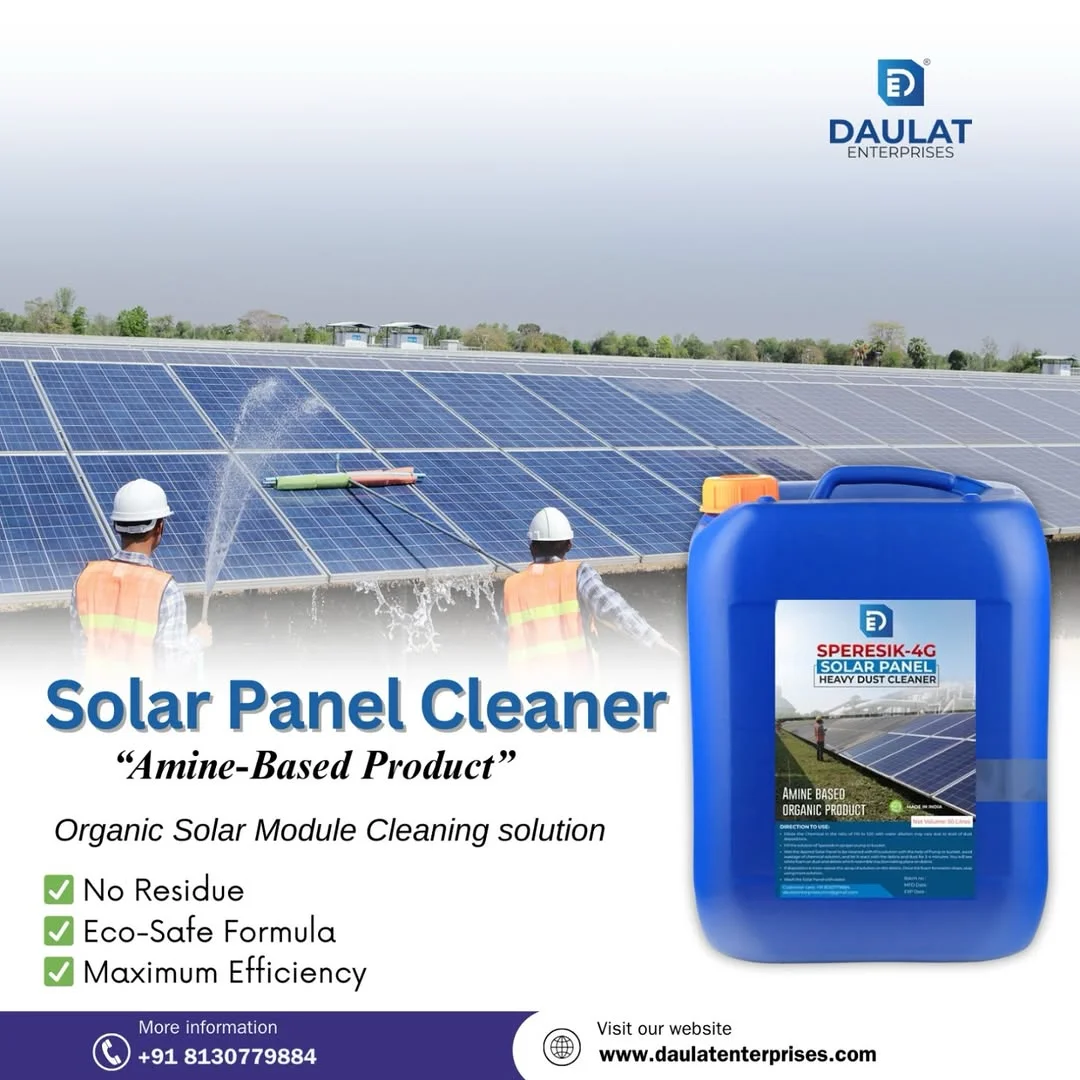
Basic cleaning methods work in the beginning, but they don’t solve every problem. As dirt builds up, some of it sticks to the surface and does not come off easily. This is where the difference between surface dust and deeper buildup starts to matter.
When dirt sticks to something, water cleaning doesn't help anymore. If the output doesn't get better after cleaning it several times, it's likely that residue is still there. This buildup stays the same over time and slows things down no matter how often they are cleaned.
These are the points where basic cleaning is no longer enough. At this stage, continuing with the same methods only maintains the problem instead of solving it. This is where an industrial solar panel cleaner becomes necessary. Solutions like SPERESIK-4G are used in these situations to remove stubborn residue and restore panel performance where basic cleaning methods fall short.
Conclusion
Not all dirt needs the same kind of cleaning, and that’s where most setups go wrong. Of course dust can be removed with water, but residue and stuck buildup won’t go away that easily. If panels are being cleaned but output is still low, repeating the same method won’t fix it anyway. That's why a better approach is to check what kind of dirt is actually there and act on that. When buildup goes beyond surface dust, using an industrial solar panel cleaner like SPERESIK-4G becomes a practical step to bring performance back on track.